
- Published on
Why Iterative Development Needs Continuous Feedback
- Authors

- Name
- Gabriel P.
- @gabriel__xyz
Why Iterative Development Needs Continuous Feedback
Iterative development thrives on continuous feedback. It’s how teams create products that genuinely solve user problems. Feedback ensures development aligns with user needs, reduces errors, and prioritizes impactful features. Without it, you risk wasting time and resources on assumptions instead of actionable insights.
Key Takeaways:
- Iterative development involves short cycles (1–4 weeks) to plan, build, test, and refine products.
- Continuous feedback helps teams focus on what users value, resolve issues early, and avoid costly mistakes.
- Tools like Features.Vote simplify feedback collection through voting boards, public roadmaps, and embedded widgets.
- Effective feedback management includes organizing input, segmenting users, and prioritizing tasks based on user needs and business goals.
Bottom line: Continuous feedback isn’t optional - it’s essential for creating products that users love while staying efficient and competitive.
Iterative Development and Continuous Feedback
Research Findings: How Continuous Feedback Improves Product Development
Research shows that continuous feedback plays a crucial role in creating successful products. By collecting user input regularly, teams can identify problems early and refine features throughout the development process. Let’s dive into how this approach leads to measurable improvements.
Companies Thriving with Feedback-Driven Development
Businesses that embrace continuous feedback often see fewer post-launch issues and faster iteration cycles. This approach not only enhances software quality but also boosts user satisfaction. Case studies reveal that maintaining a feedback loop throughout development improves both efficiency and the final product’s performance.
Effective Feedback Collection Methods
Structured systems, like feature voting platforms, allow teams to prioritize updates based on user needs. Feedback collected during actual user interactions tends to be more actionable than generic surveys or forms.
When combined with short development cycles, these methods show clear benefits. Frequent feedback within iterative frameworks results in quicker project completions and higher acceptance of new features by users. Research also highlights the importance of timing and consistency - gathering feedback at the right intervals ensures teams capture meaningful insights without overburdening users.
How to Collect and Manage Continuous Feedback
In iterative development, collecting and organizing user feedback is a cornerstone for making consistent improvements. A strong feedback system taps into various channels to gather user insights during development and ensures those insights are actionable.
Feedback Collection Tools
Feature voting boards are a great way to let users share ideas and vote on suggestions. Unlike one-time surveys, these boards encourage ongoing user participation and help prioritize features based on community input. They also foster a sense of involvement in shaping the product's future.
Embedded widgets are built right into your app, allowing users to share feedback in real time as they navigate the product. Whether they encounter a challenge or think of a new feature idea, these widgets capture insights tied directly to their experience.
Public roadmaps give users a transparent view of planned features and progress, showing them how their feedback influences development. When users see their input making a difference, they’re more likely to provide thoughtful and detailed suggestions.
Platforms like Features.Vote bring these tools together - feature voting boards, public roadmaps, and customizable widgets - into one integrated system, simplifying how feedback is gathered and organized.
But collecting feedback is just the first step. Managing it effectively is what turns raw input into meaningful improvements.
Managing Feedback Efficiently
To make feedback actionable, you need to organize it strategically. Here’s how:
Segment users to separate insights from active users and casual visitors. Feedback from engaged users often carries more weight and reveals deeper insights into your product's strengths and weaknesses.
Analytics help spot trends across different suggestions. For example, if multiple users request similar features but describe them differently, analytics tools can reveal these patterns. Features.Vote’s dashboard tracks voting activity, feedback trends, and user engagement over time, making it easier to identify emerging needs.
Automated moderation keeps your feedback boards clean by filtering out duplicates, off-topic comments, and vague suggestions. Without moderation, boards can quickly become cluttered, making it harder to focus on valuable insights. Features.Vote includes tools to maintain quality while still allowing meaningful input.
Team management tools ensure feedback gets to the right people. Assigning feedback to specific team members and tracking progress prevents valuable insights from being buried in email threads or other communication channels. This approach keeps everyone accountable and ensures user concerns don’t slip through the cracks.
Private boards are perfect for handling sensitive feedback from beta testers or enterprise clients. These boards allow for confidential discussions without exposing internal matters, making them ideal for managing everything from public feature requests to private client needs - all within a single system.
sbb-itb-87ea67c
Turning Feedback into Iterative Improvements
Once you've set up an efficient system for managing feedback, the next step is turning those insights into actionable product updates. This means taking the feedback you've gathered and translating it into specific tasks that align with your sprints and overall roadmap.
The trick is finding the right balance between what users want and what makes sense for your business. It’s not just about tallying up votes or comments; you also need to think about things like how hard a feature will be to implement, how well it fits your strategy, and how much impact it will have on your users.
How to Prioritize Feedback for Sprints and Roadmaps
To make feedback actionable, you need a clear, structured system that helps you decide what to tackle first.
Start by assessing impact and validating with voting data. Features that solve major user problems should come first, even if they haven’t racked up the most votes. Focus on feedback that addresses pain points directly tied to your product’s core value. Tools like Features.Vote can help by showing vote counts and tracking trends over time, letting you spot rising priorities before they become critical.
Balance user demand with ease of implementation. Sometimes, a feature with moderate interest might make more sense to build first if it’s quick to implement. A scoring system that weighs user interest against the effort required can help keep your team moving efficiently.
Look for patterns in feedback across different user groups. Power users often bring technical insights to the table, while newer or casual users might highlight usability issues. Both perspectives are valuable - engaged users can guide retention strategies, while newer users can help refine onboarding experiences.
Act quickly on time-sensitive feedback. Bugs and usability issues that disrupt core functionality should jump to the top of your list, no matter how many votes they’ve received. Fixing these problems can dramatically improve the user experience and reduce churn.
Break down complex features into smaller, deliverable parts. Start by shipping the core functionality, then gather feedback and build on it incrementally. This approach allows you to make meaningful progress while staying responsive to user input.
Manual vs Platform-Based Feedback Management
As feedback piles up and development cycles roll on, the difference between manual methods and using a dedicated platform becomes increasingly clear.
| Aspect | Manual Methods | Platform-Based (Features.Vote) |
|---|---|---|
| Time Investment | Requires significant time to organize spreadsheets, emails, and files. | Streamlines the process with dashboards, saving time on reviews. |
| Data Accuracy | Prone to errors, duplicate entries, and lost feedback. | Automates categorization and deduplication for reliable data. |
| User Engagement | Captures one-off inputs with limited follow-up. | Encourages ongoing participation with visible voting and transparent roadmaps. |
| Prioritization | Relies on subjective judgment and incomplete data. | Provides clear, data-driven prioritization based on vote trends. |
| Team Collaboration | Feedback scattered across emails and meetings, making consolidation difficult. | Centralizes input with role-based access and streamlined notifications. |
| Scalability | Becomes overwhelming as feedback volume grows. | Scales effortlessly to handle more user suggestions without extra effort. |
Using a platform like Features.Vote can transform feedback from a time-consuming chore into a valuable resource. Automated categorization, trend tracking, and historical records make it easier to stay on top of shifting user priorities.
Another major advantage is integration with development workflows. You can link user feedback directly to development tasks, creating a clear path from suggestion to implementation. This also makes it easier to keep your community in the loop about progress.
Finally, platforms that offer transparency encourage users to stay engaged. When people see their suggestions being tracked and prioritized, they’re more likely to contribute thoughtful feedback. This creates a positive cycle where user input keeps improving your product.
Next, we’ll explore common challenges in weaving continuous feedback into your development process.
Common Challenges in Continuous Feedback Integration
Bringing continuous feedback into iterative development can be tricky. Teams often find themselves overwhelmed with suggestions, struggling to prioritize, or dealing with input that doesn’t align with their product vision. Since iterative development thrives on quick adjustments, managing feedback effectively is essential to keep things moving. Let’s dive into some common hurdles and why having a solid system in place matters.
Feedback Management Problems
Too much feedback is a headache for many teams. When you open the door to user input, you might end up with more than you can handle. Without a way to sort through it efficiently, valuable insights can get buried under duplicate or irrelevant suggestions.
Conflicting inputs add another layer of complexity. For example, power users might push for advanced features that could confuse newcomers, while casual users might ask for simpler options that don’t satisfy your most engaged customers. Finding a balance requires a structured approach to weigh these competing demands.
Limited resources often make things worse. Smaller teams may not have the time or capacity to review, sort, and act on feedback quickly. When users feel ignored because their suggestions aren’t acknowledged or acted upon, they’re less likely to stay engaged. Over time, this can lead to a decline in valuable input.
Inconsistent quality of feedback creates additional challenges. Some users provide detailed, actionable suggestions, while others submit vague or incomplete ideas that are hard to act on. Without proper moderation, your feedback channels can become cluttered, wasting time and effort.
Best Practices for Effective Feedback Integration
Set clear expectations with users right from the start. Let them know what kind of feedback you’re looking for, how often you review it, and how long it might take to respond. This helps manage expectations and encourages more useful submissions.
Provide guidelines to help users share better input. Ask for specifics like use cases, how often they encounter the issue, and how it impacts their workflow. The more context you have, the easier it is to prioritize and act on their suggestions.
Review feedback on a schedule instead of constantly processing it. Weekly or bi-weekly review sessions allow you to identify patterns and make thoughtful decisions without getting overwhelmed. This also prevents feedback from piling up.
Be transparent about your decisions. If you decide not to implement a popular request, explain why. Whether it’s due to technical limitations or strategic priorities, users appreciate honesty. This builds trust and keeps them engaged, even if their specific ideas aren’t implemented.
Balance user requests with your business goals. Just because a feature is popular doesn’t mean it’s the right one to build next. Consider factors like development complexity, long-term maintenance, and how well it aligns with your product roadmap. Sometimes, a less popular feature might make more sense strategically.
Segment feedback by user type, subscription level, or behavior. For example, enterprise customers might have different needs than individual users, and new users might highlight issues that long-time customers don’t notice. Breaking feedback into categories helps you prioritize more effectively.
Close the loop by keeping users updated. When you release a feature that was requested, let those users know. Recognizing their input not only shows you value their suggestions but also encourages them to stay engaged and keep contributing.
How Features.Vote Solves Feedback Management Problems
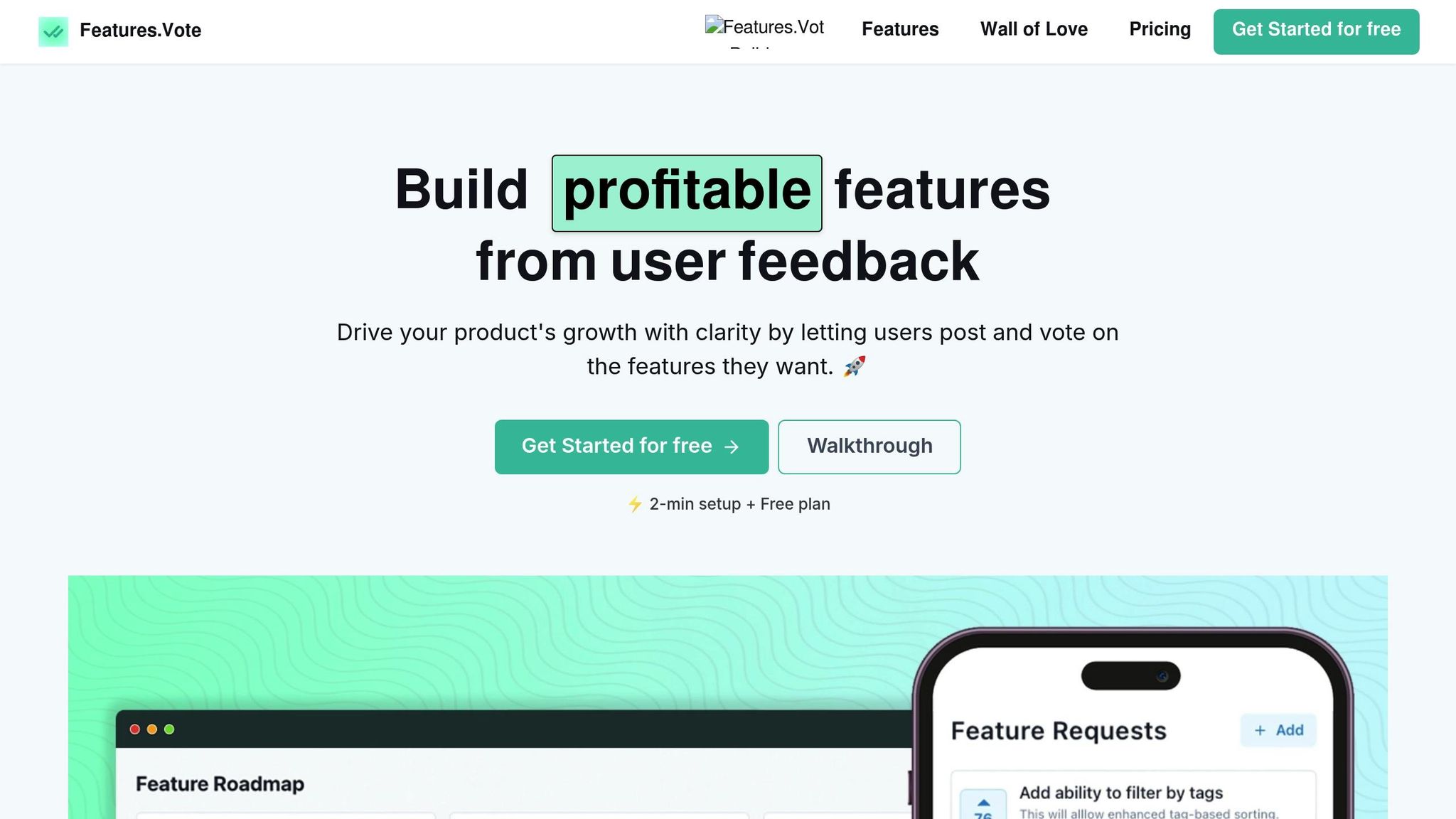
Features.Vote takes these challenges head-on with a suite of tools designed to make feedback management easier and more effective.
Automatic grouping and filtering ensure that duplicate suggestions don’t clog up your system. By tracking voting trends, the platform highlights rising priorities so you can focus on what matters most without constant manual monitoring.
User segmentation tools let you analyze feedback across different customer groups. Whether it’s comparing needs between power users and casual users or understanding priorities by subscription tier, this feature helps you make smarter decisions.
Built-in analytics and reporting save you from tedious manual analysis. You can quickly identify which features are gaining traction, spot seasonal trends in requests, and measure user engagement across segments.
Seamless integrations connect your feedback directly to your development workflow. Instead of copying ideas from spreadsheets into project management tools, Features.Vote allows you to link suggestions to tasks and track progress in real-time.
Transparent roadmaps keep users in the loop about your priorities and progress. When users can see their feedback being considered, they’re more likely to stay engaged and provide thoughtful input.
For sensitive feedback or internal discussions, the platform’s private boards offer a controlled environment. This is especially useful for enterprise customers or beta testing groups that require a more secure feedback process.
Conclusion: Why Continuous Feedback is Critical for Iterative Development
Let’s face it - iterative development without continuous feedback is like driving with your eyes closed. You might be moving, but there’s no way to know if you’re heading in the right direction. It’s clear from experience and evidence that the best products come from teams that actively listen to users and adapt quickly based on what they learn.
When companies embrace continuous feedback, they don’t just create products that resonate with users. They also avoid expensive mistakes and stay ahead of the competition. By putting the right systems in place, teams can turn what might seem like overwhelming challenges into opportunities to stand out.
But here’s the thing: feedback management isn’t just about collecting ideas. It’s about transforming user input into actionable insights. Teams that rely on manual methods often struggle to keep up. However, structured systems can simplify the process, making it easier to identify trends and act on them effectively.
In today’s fast-paced development world, rapid iteration is non-negotiable. Teams that can quickly test ideas, gather user reactions, and refine their products based on real-world feedback consistently outperform those that rely only on internal assumptions. The faster you close the feedback loop, the better your product aligns with actual user needs.
Key Takeaways
To sum it up: successful iterative development depends on continuous user engagement. Teams that prioritize feedback collection and management see tangible improvements in user satisfaction, feature adoption, and overall product success.
With structured feedback systems, chaos turns into clarity. Instead of being overwhelmed by a flood of suggestions, teams can track trends, identify patterns, and make informed decisions about their product’s future.
Transparency with users also plays a big role. When users see how their feedback shapes development decisions, they’re more likely to provide thoughtful input and stay engaged throughout the product’s evolution.
Platforms like Features.Vote tackle the core issues that often make feedback integration challenging. From automatically grouping suggestions to offering transparent roadmaps, such tools transform feedback management from a tedious task into a strategic advantage that drives smarter product decisions.
In competitive markets, the companies that succeed are the ones that listen, learn, and adapt. Continuous feedback isn’t just a helpful addition - it’s a cornerstone of modern development. The ability to quickly integrate feedback isn’t optional; it’s what separates products that thrive from those that fade away.
FAQs
::: faq
How can teams incorporate continuous feedback into iterative development without feeling overwhelmed?
To make continuous feedback a seamless part of iterative development, it's important to focus on keeping feedback clear and to the point. Use tools like brief, well-timed surveys or feedback mechanisms at critical moments to gather useful insights without disrupting the team’s flow. Creating a culture where feedback is welcomed and valued ensures that both team members and users feel their input matters.
Regular review sessions are another key element. These meetings allow the team to assess and prioritize feedback, making sure it aligns with the project’s objectives. To maintain productivity, establish boundaries - like setting specific times for reviewing feedback - so the team isn’t constantly interrupted. This approach strikes a balance between leveraging continuous feedback and maintaining focus and efficiency. :::
::: faq
How can product teams balance user feedback with business goals during development?
Balancing user feedback with business goals is all about finding the sweet spot where user needs and company priorities align. Start by establishing clear objectives - define what success means for both your users and your business. This clarity helps you evaluate feedback based on how well it aligns with these goals.
To make this work, product teams should encourage collaboration across departments, consistently test and tweak features, and focus on feedback that ties directly to key business metrics. By zeroing in on actionable insights and keeping a strong vision in mind, you can create products that genuinely connect with users while also achieving your business targets. :::
::: faq
How does Features.Vote simplify collecting and managing user feedback?
Features.Vote simplifies gathering and prioritizing user feedback by automating the entire process. With tools like embedded voting boards and customizable widgets, businesses can effortlessly collect user input directly within their apps. This makes it simple and convenient for users to share their opinions.
The platform also offers real-time feature prioritization based on user votes, cutting out the delays and inaccuracies of manual methods. This means teams can quickly identify what matters most to their users and focus on building features that truly make an impact. :::