
- Published on
How Feature Voting Improves Team Collaboration
- Authors

- Name
- Gabriel P.
- @gabriel__xyz
How Feature Voting Improves Team Collaboration
Feature voting simplifies decision-making by turning scattered feedback into clear priorities. It allows teams and users to vote on feature requests, creating a transparent, data-driven ranking system. This approach reduces miscommunication, aligns teams, and ensures everyone understands why certain features are prioritized. Tools like Features.Vote centralize feedback, eliminate redundant tools, and provide analytics for smarter decisions. By involving all team roles - like support, sales, and development - feature voting ensures diverse insights guide product development. The result? Fewer meetings, faster decisions, and better collaboration without endless debates. Key benefits include:
- Centralized feedback: A single hub for feature requests eliminates scattered inputs.
- Transparency: Public roadmaps keep everyone informed about priorities and timelines.
- Efficiency: Voting reduces lengthy discussions and speeds up decision-making.
- Team alignment: All roles contribute, ensuring well-rounded decisions.
Platforms like Features.Vote automate updates, integrate into workflows, and provide analytics to streamline the process, making feedback actionable and improving team dynamics.
Revolutionize Team Decisions with Dot Voting on Miro
::: @iframe https://www.youtube.com/embed/6ZoX4OhsVV4 :::
Bringing All Feedback Into One Place
Teams often grapple with managing feedback that comes from all directions. Customer support tickets are tucked away in separate systems, sales teams share requests via platforms like Slack, product managers try to organize ideas in spreadsheets, and user feedback gets buried in endless email threads. This scattered approach can lead to blind spots, duplicated efforts, and missed opportunities. That’s where a unified feedback platform comes in.
Problems with Scattered Feedback
When feedback is spread across multiple tools and platforms, teams waste valuable time just trying to find the information they need. Developers might dig through emails, while product managers spend hours piecing together data from various sources.
This disorganized system creates several key issues. Critical requests can easily slip through the cracks, leaving users feeling unheard. Teams may end up prioritizing features that seem urgent to one department but don’t align with the company’s overall goals.
As organizations grow, this problem only gets worse. What might work for a small startup - where informal conversations suffice - becomes chaotic in larger companies with multiple departments and remote teams.
Building One Central Location for All Feedback
Centralizing feedback solves these challenges by gathering all input into a single, accessible location. Feature voting platforms are a great example of how this can be done effectively, offering a unified hub for all feedback.
This approach changes the game for feedback management. Teams no longer have to juggle multiple tools or manually compile information. Instead, they can streamline the process, saving time and reducing errors.
Take Features.Vote, for instance. It makes centralization effortless by allowing teams to embed voting boards directly into their existing workflows. Users can submit and vote on feature ideas without leaving the app, ensuring feedback is captured in real time without the hassle of visiting a separate site or filling out long forms.
For organizations with complex needs, the Premium plan includes unlimited projects, enabling teams to organize feedback by product line, customer segment, or development team - all while maintaining a centralized view. Built-in analytics offer insights into voting trends and user behavior, helping teams uncover patterns that might otherwise go unnoticed.
Clear Processes Build Team Trust
When everyone has access to the same information and understands how decisions are made, trust naturally follows. Transparent processes eliminate internal politics, ensuring that priorities are based on user data and engagement metrics rather than personal preferences. This shared understanding fosters mutual respect across teams.
The public roadmap feature in Features.Vote takes transparency a step further. By displaying planned features and explaining the reasoning behind them, teams can better manage user expectations. Customer success teams, for example, can use the roadmap to communicate delivery timelines for requested features, reducing the strain on support channels.
Clear processes also speed up decision-making. Features like activity logs and analytics provide historical context, so teams spend less time debating priorities in meetings. Engineering teams can focus on the right features, sales teams can set accurate expectations, and customer success teams can provide reliable timelines. With everyone working from a single source of truth, collaboration becomes seamless and natural, not forced.
Getting Everyone Involved in Decisions
Traditional top-down development often creates a gap between builders and users. Feature voting flips this model by giving every team member a voice in deciding what gets built next. Let’s explore how involving different roles can lead to smarter decisions and stronger collaboration.
When the whole team participates, everyone feels more invested. Developers gain a clearer sense of why certain features are prioritized, designers understand the bigger picture behind user requests, and support teams can share insights from real customer interactions. This collective effort results in better products and a more aligned team.
Including Different Team Roles
The magic of feature voting lies in bringing together perspectives from across the organization. For example:
- Customer support teams know user pain points better than anyone - they hear them every day.
- Sales teams can identify which missing features are deal-breakers for potential customers.
- Developers understand the technical challenges behind even the simplest-sounding requests.
By blending these perspectives, teams can make smarter decisions. Tools like Features.Vote make this process seamless by allowing custom voting weights. This means you can assign more influence to roles with unique insights, ensuring decisions are guided by the right expertise.
If your team uses the Premium plan, there’s no limit to how many members can join in. You can organize votes by department, project, or area of expertise, making it easy to include everyone who has a stake in the decision.
Fewer Meetings with Clear Priorities
One of the biggest hurdles in product development is endless debates about what to build next. Without clear data, prioritization meetings can drag on for hours. Feature voting solves this problem by providing concrete, data-backed insights into what matters most.
When voting results are clear, teams can cut down on lengthy discussions and focus on action. Instead of spending time debating priorities, they can spend more time building. Plus, the voting process creates a transparent record of decisions. If someone later questions why a feature was prioritized, teams can point to the voting data and user feedback, avoiding repeated debates.
Building Agreement Through Voting
When everyone’s feedback is gathered in one place, feature voting naturally brings teams together. Participating in a decision makes team members more likely to support the outcome - even if their top choice wasn’t selected. This process fosters a sense of shared ownership over product priorities, making everyone feel heard and valued.
Shared voting data also turns disagreements into opportunities to learn. For instance, a developer might not understand why a minor UI tweak is so popular until they hear from customer success about its impact on user onboarding. These conversations build empathy and alignment across roles.
The transparency doesn’t stop with the team. A public roadmap feature allows users and stakeholders to see how their input shapes decisions. When external users notice their feedback influencing priorities, they often feel more connected to the product’s development. This connection encourages even better feedback in the future, creating a positive cycle of collaboration.
sbb-itb-87ea67c
Making Feedback Actionable
Gathering feedback is just the first step. The real challenge lies in transforming those insights into practical steps that drive progress. Feature voting serves as a bridge, creating a structured process that takes feedback from collection to implementation, ensuring no valuable input gets overlooked.
The secret to success? Seamless integration. Feature voting shouldn't feel like an extra task - it should naturally fit into your team's workflow. When done right, it becomes a core part of how you operate, making feedback actionable from the start.
Adding Feature Voting to Your Workflow
Smart teams treat feature voting as an ongoing process. Weekly feedback reviews ensure new suggestions are logged, while monthly assessments help update priorities based on the latest input.
Consistency is key. Set up clear handoffs where feature requests are logged promptly, and voting results are reviewed after each sprint to guide development decisions. This approach removes the guesswork that often slows down product development.
Timing is everything. Fixed voting windows - like a two-week period followed by a team review - help avoid endless debates and speed up decision-making. To streamline further, integrate voting results directly into your project management tool. This way, popular features automatically move into the planning phase without delays.
Setting Clear Voting Rules
Once feature voting is part of your workflow, it’s crucial to formalize the process with clear rules. Without structure, the system can quickly become chaotic. Start by setting vote limits per person. A good rule of thumb is 5–10 votes per team member - enough to express preferences without overwhelming the results.
Deadlines matter, too. Establish firm voting deadlines to keep the process moving. This sense of urgency ensures decisions don’t drag on and demonstrates that everyone's input leads to action.
Transparency is another cornerstone of effective feature voting. Make sure everyone understands how votes are counted, who can participate, and how results are used. When the process feels fair, team members are more likely to accept the outcomes - even if their preferred features don’t make the cut.
Automated Updates with Features.Vote
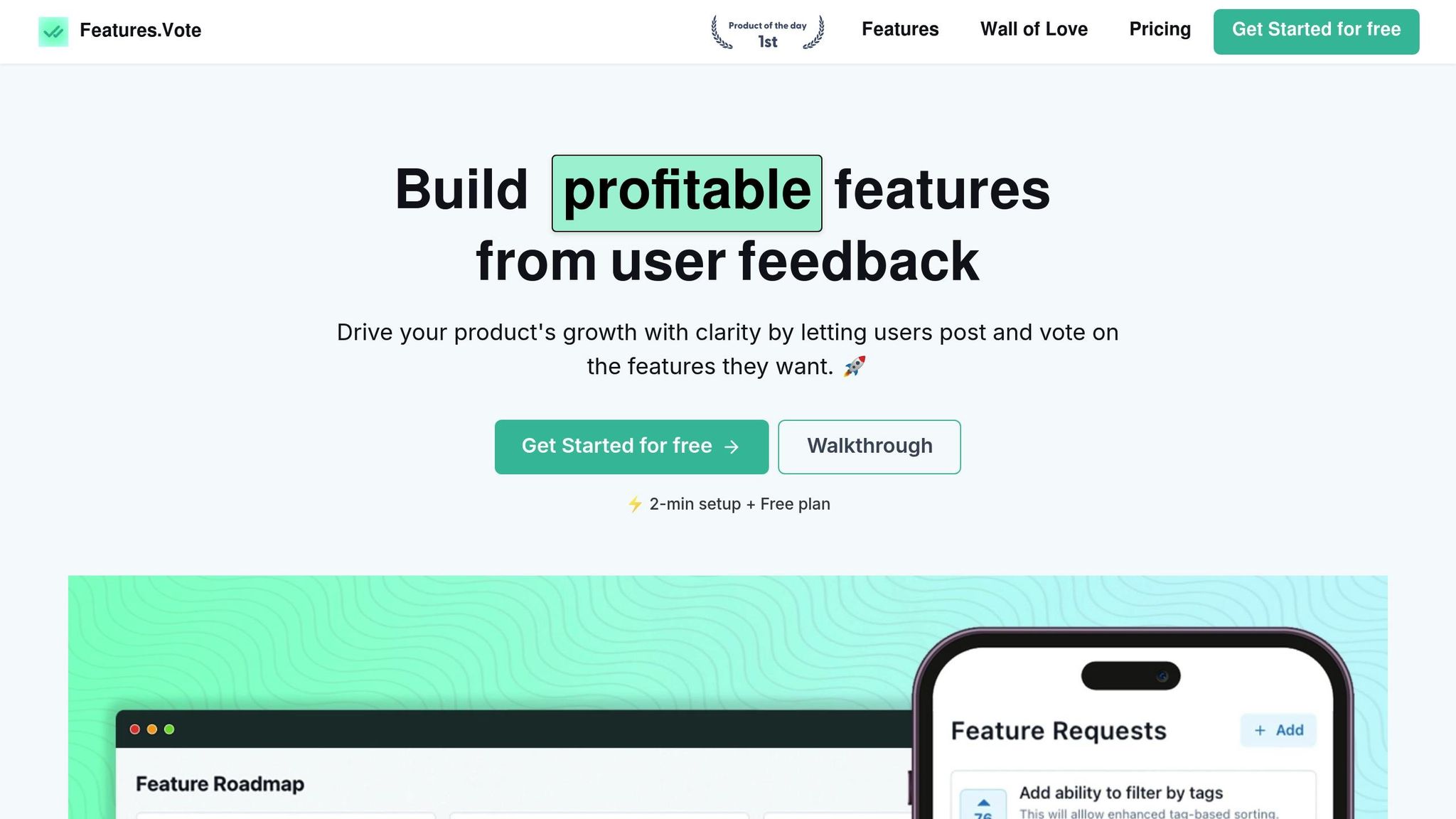
To simplify collaboration even further, automation ensures every vote leads to timely updates. Manual updates often fall through the cracks when teams are busy, leaving stakeholders in the dark. Features.Vote solves this by automating the communication process entirely.
The platform’s Analytics feature offers real-time insights into voting patterns and user preferences. Product managers can instantly see which features are gaining traction without the hassle of tallying votes or creating reports. This makes it easier to spot trends and act on them quickly.
Changelog automation keeps everyone in the loop. As features move from voting to development and eventually to release, automatic notifications ensure stakeholders stay informed. This kind of consistent communication builds trust and reinforces the idea that feedback drives real change.
"Close the loop by notifying users when the suggestions they voted up are implemented."
"By closing the feedback loop, you make your users feel heard and encourage them to continue contributing product improvements and feature ideas."
- Feature Upvote [2]
For teams using Features.Vote’s Premium plan, priced at $19 per month, these automation tools eliminate hours of manual work each week [1]. The public roadmap feature takes transparency to the next level by automatically reflecting voting results. This not only keeps users and stakeholders informed but also reduces the flood of "when will this be built?" inquiries that typically overwhelm support teams.
Results and Best Practices
Feature voting has the potential to significantly improve team collaboration, but its success hinges on a clear understanding of both its advantages and its challenges. A well-thought-out approach fosters focused teamwork, while a hasty implementation can lead to setbacks.
It’s essential to remember that feature voting is just one of many tools in the decision-making process. By keeping this in mind, teams can establish effective practices that drive meaningful results.
Benefits and Challenges of Feature Voting
Feature voting shifts discussions from subjective opinions to data-driven insights, enabling quicker, more objective decisions. This approach encourages focused and productive conversations.
It also boosts engagement by making team members feel valued when their input shapes product direction. However, it’s not without its challenges. Popularity bias can skew results, and vote fatigue can reduce participation over time. To counter these, setting clear boundaries - like limiting votes or scheduling voting cycles - helps maintain balance and ensures meaningful contributions.
By addressing these challenges, teams can unlock the full potential of feature voting while avoiding common pitfalls.
Best Practices for Team Collaboration
To make the most of feature voting, successful teams follow a set of proven best practices:
- Regular review cycles: Keep momentum alive by revisiting votes and decisions on a consistent schedule.
- Transparency: Share voting results openly and explain how they influence decisions, fostering trust and clarity.
- Segmentation: Organize votes by customer tier or team role to provide proper context and prioritize effectively.
- Inclusive participation: Encourage input from all departments, such as sales, support, and customer success, to gather diverse insights.
- Closing the loop: Keep participants informed about the progress of features, from planning to release.
- Engaging with voters: Follow up to understand the reasoning behind requests, adding depth to the feedback.
These practices not only enhance collaboration but also ensure that feature voting becomes a valuable part of the decision-making process.
Long-Term Benefits for Teams
Teams that embrace feature voting over the long term often see cumulative advantages. Meetings become more execution-focused, reducing time spent on debates. A culture of collaboration and respect flourishes when everyone’s voice is heard, sparking creative and innovative solutions.
To maintain alignment with changing team needs and business objectives, it’s important to regularly review and fine-tune the voting process. Connecting feature requests to active deals or high-value customers can also help align product decisions with revenue goals.
Tools like Features.Vote amplify these benefits by providing built-in analytics for real-time insights into voting trends and sending automated notifications to keep everyone in the loop. These features streamline updates and reinforce the value of a centralized feedback system, ensuring that the process remains efficient and impactful for teams.
Conclusion: How Feature Voting Changes Team Dynamics
Feature voting transforms chaotic feedback into clear, actionable decisions based on data. By embracing this method, teams shift from endless debates to a system of objective prioritization that everyone can understand and rally behind.
This approach benefits every role on the team. Product managers can focus on executing priorities that have been validated by real user input. Developers gain a sharper understanding of what matters most to users, enabling more targeted and productive development cycles. Sales and support teams feel their voices are heard, as their customer insights directly influence the product roadmap.
With feature voting, transparency becomes a cornerstone of the process. Team members can see exactly why certain features are prioritized, removing the frustration that often stems from unclear decision-making. This visibility helps reduce tensions between departments and fosters better collaboration.
Platforms like Features.Vote take these benefits even further. Their tools make it easy to centralize feedback, identify trends through analytics, and keep everyone updated with automated notifications - no more chasing down updates manually. Teams can even integrate voting boards directly into their apps, streamlining the process for users to share their input seamlessly.
Beyond operational improvements, feature voting fosters a culture where every team member’s input is valued. This turns collaboration into something genuine rather than just for show. Teams align around a shared understanding of user needs and business goals, creating a stronger sense of purpose. By embracing data-driven collaboration, teams not only build better products but also create an environment where everyone feels empowered to contribute to the product’s success.
FAQs
::: faq
How does feature voting help teams have fewer meetings?
Feature voting is a game-changer for teams looking to cut down on endless meetings. It allows everyone to collaboratively and asynchronously prioritize tasks and ideas. Instead of spending hours debating what matters most, team members can simply cast their votes on features or proposals.
This approach keeps meetings focused on the big stuff - like solving critical issues - rather than getting bogged down in discussions about priorities. The result? Faster decisions, more productive meetings, and less time wasted on unnecessary back-and-forth. :::
::: faq
How can teams avoid popularity bias and vote fatigue when using feature voting tools?
To tackle popularity bias, teams can implement strategies that ensure less popular features aren't overlooked. This might include adjusting vote weights to level the playing field or spotlighting options that are often underrepresented. The goal is to ensure every piece of feedback gets the attention it merits.
For vote fatigue, it helps to limit how often users are asked to vote, keep voting sessions brief, and rotate the options to maintain interest. Explaining the purpose behind voting can also go a long way in keeping users engaged and motivated to participate.
By using these approaches, teams can create a feedback system that's both balanced and effective, allowing them to make well-informed decisions without overwhelming their users. :::
::: faq
How does feature voting help teams integrate feedback from different roles into product development?
Feature voting makes it easier to gather and manage feedback from different team members by offering a single platform for suggestions, voting, and discussions. It allows everyone to share their ideas and collectively decide which features should take priority, ensuring input from all perspectives is taken into account.
This method encourages open communication and real-time teamwork, letting teams see which ideas are gaining traction and adjust priorities to align with shared goals and user expectations. By connecting feedback directly to product goals, feature voting helps teams work together more effectively and make smarter decisions. :::